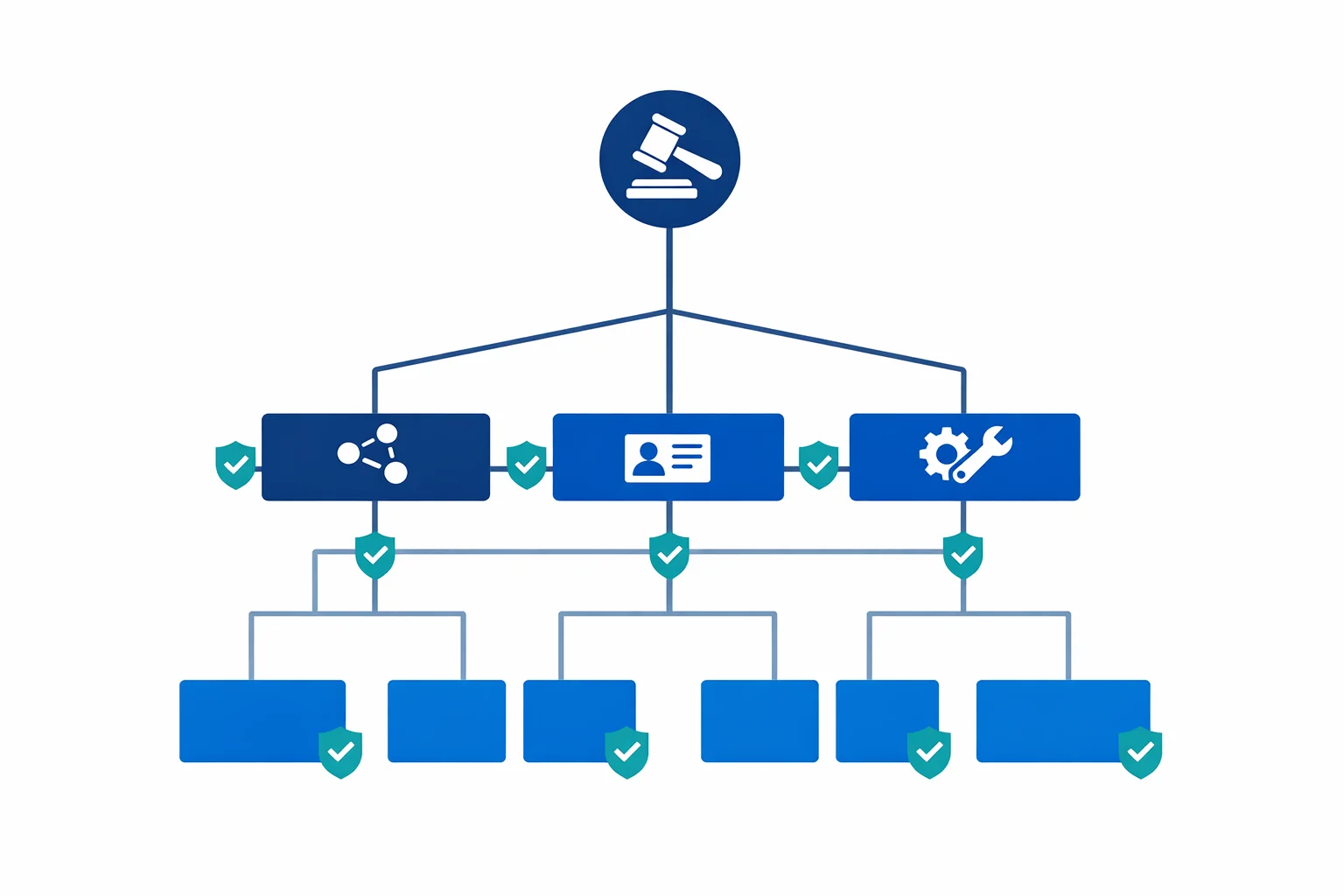
Cloud Sovereignty in 2026 and Why It Is a Workload Classification Problem
In this article

In short: Cloud sovereignty in 2026 is no longer answered by “host it in the EU.” The practical task is to classify each workload by sovereignty pressure, hyperscaler dependency, and portability readiness, then place it on the right platform tier with evidence procurement and legal can defend.
For most of the last decade, “is this in the EU?” was a sufficient answer to cloud sovereignty questions. Pick a region inside the EU, document it in the contract, satisfy GDPR Article 28, move on. That answer no longer survives a serious tender.
The European Commission’s Cloud Sovereignty Framework has turned sovereignty into a measurable procurement criterion. It defines Sovereignty Effectiveness Assurance Level (SEAL) tiers and an overall sovereignty score calculated from 48 criteria across eight categories spanning legal, jurisdictional, operational, supply-chain, technological, security, compliance, and sustainability dimensions. In the 2026 sovereign-cloud procurement, providers had to reach at least SEAL-2, which targets data sovereignty, and most awarded providers reached SEAL-3, which targets digital resilience against non-EU third-party supply-chain disruption. Similar language is starting to appear in public-sector and regulated procurement discussions, especially where non-EU extraterritorial legal reach is scrutinised.
These signals do not mean hyperscalers are leaving Europe. They mean procurement language has shifted, and that architectures need to be defensible against questions that “data hosted in West Europe” no longer answers.
The framework is European, but the underlying question is not. A regulated team in Singapore running an outsourcing or technology-risk review under MAS expectations works the same classification problem from a different vocabulary: where does the data sit, who can reach it, which third party do you depend on, and can you move off it. Read SEAL as one regional expression of a demand that now turns up in most serious regulated procurement.
The useful framing for 2026 is no longer “which provider should we pick?” The useful framing is “which workload, which concern, which platform tier?” Different workloads belong on different tiers, and the classification is what carries the procurement discussion.
The Five Sovereignty Concerns
Sovereignty is a single word for at least five distinct concerns. Each has different triggers and different architectural levers. Treating them as one concern leads to overspending on the wrong platform.
| Concern | Triggers | Architectural lever |
|---|---|---|
| Data residency | GDPR, sector regulation, client contracts | Region pinning, customer-managed keys, geofencing |
| Operator access | NIS2, DORA, classified data, sensitive personal data | Customer lockbox, confidential computing, partner cloud |
| Foreign legal reach | CLOUD Act, FISA 702, sanctions exposure | EU-incorporated provider, sovereign partner cloud, BYOK with external HSM |
| Continuity and reversibility | Procurement defensibility, exit-clause enforceability | Portability stack, contractual exit plan, multi-cloud readiness |
| Procurement defensibility | EU tender scoring, SEAL levels, and emerging EU or national cloud certification schemes | Documented control trail, attestation evidence |
A retail e-commerce platform processing EU customer data is mostly a residency concern with a thin operator-access layer. A national health-data registry is mostly a foreign-legal-reach and operator-access concern. A telecom operational platform classified as an essential entity under NIS2 is mostly a continuity and reversibility concern. The platform answer differs because the concern differs.
Foreign legal reach should be validated with counsel. Architecture can document exposure, controls, and reversibility, but it does not replace legal analysis of CLOUD Act, FISA 702, or sanctions risk.
The Platform Spectrum
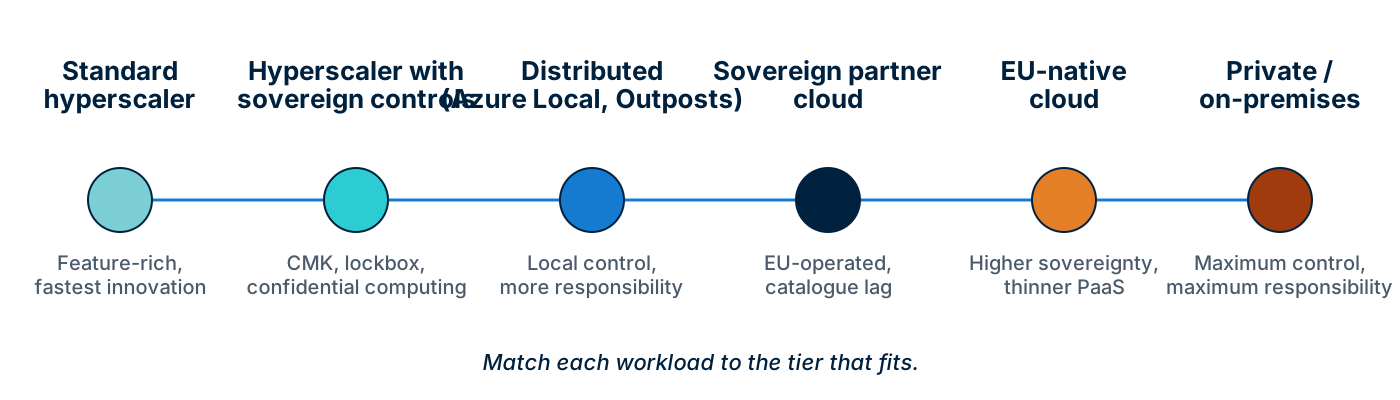
There are more platform tiers available in 2026 than the “hyperscaler or sovereign” framing suggests.
| Tier | Examples | Typical sovereignty profile | Trade-off |
|---|---|---|---|
| Hyperscaler global | Azure, AWS, GCP global commercial regions | Residency yes, foreign legal-reach exposure | Feature breadth, innovation pace |
| Hyperscaler with sovereign controls | Customer-managed keys, confidential computing, customer lockbox | Residency plus operator-access controls | Controls add cost and operational discipline |
| Hyperscaler partner cloud | Bleu (FR), S3NS (FR), Delos (DE) | Operator-controlled, EU-incorporated | Service catalogue and rollout lag the parent hyperscaler |
| Hyperscaler distributed or on-customer-premises | Azure Local, AWS Outposts, GCP Distributed Cloud | Operator-controlled hardware, with disconnected operation supported in specific approved scenarios | Hardware footprint, operational responsibility, scope limits |
| EU-native cloud | Scaleway, OVHcloud, STACKIT, IONOS | EU-incorporated; sovereignty score depends on provider, offer, and procurement context | Smaller PaaS catalogue, less managed-AI depth |
| Private or on-premises | Self-hosted, colocated, sovereign-tier private cloud | Operator-controlled by default | Capex, internal operations team, slower innovation pace |
The trade-off column is the part teams underestimate. Partner clouds carry sub-feature parity with the parent hyperscaler and lag on service rollout. Azure Local has Microsoft-documented prerequisites including eligible licensing, approved hardware, skilled operators, and management-cluster capacity. Disconnected operation is not a checkbox; it is a specific Azure Local operating model with eligibility, hardware, management-cluster, and operator requirements, including account-team approval. Many EU-native providers offer common primitives such as Kubernetes, S3-compatible storage, and managed PostgreSQL, but maturity and operational depth vary by provider, and managed-AI and identity-service catalogues are typically thinner. Each tier moves one sovereignty dial up and one operational dial down.
A Workload Classification Matrix
The decision is not which platform suits the organisation overall. The decision is which workload goes where, and a small matrix is enough to start.
For each workload, score three dimensions:
- Sovereignty pressure (low, medium, high, very high), based on data sensitivity, sector regulation, and procurement context
- Hyperscaler-feature dependence (low, medium, high), based on reliance on managed AI, identity, observability, and proprietary PaaS
- Portability readiness (low, medium, high), based on whether the workload runs on Kubernetes, S3-compatible storage, and PostgreSQL
The combination drives the candidate tier. Worked examples below.
| Workload example | Sovereignty pressure | Hyperscaler-feature dependence | Portability readiness | Candidate tier |
|---|---|---|---|---|
| Public-facing marketing site | Low | Medium | High | Hyperscaler global |
| Internal productivity (mail, collaboration) | Medium | Very high | Low | Hyperscaler global with sovereign controls |
| Enterprise SaaS dev and test | Medium | High | Medium | Hyperscaler with sovereign controls |
| NIS2 essential operational platform | High | Medium | Medium | Partner cloud or hyperscaler distributed |
| National health-data registry | Very high | Medium | High | EU-native or sovereign partner cloud |
| Critical infrastructure / OT control plane | Very high | Low | Variable | Distributed on-premises or private cloud |
| AI and innovation platform | Variable | Very high | Low | Hyperscaler global, evaluated per use case |
The matrix is illustrative. Most organisations will have ten to thirty workload archetypes and will land different ones on different tiers. The point of the exercise is that the placement decision becomes traceable: each workload sits where it does because of how it scored, and the score is itself documented.
The classification work pays off in two places. It produces a defensible record for procurement reviews. It also surfaces which workloads need portability investment before the platform discussion is even worth having.
Portability Primitives That Survive Any Choice
The single most useful pre-condition for sovereignty conversations is a workload built on primitives that exist across the spectrum. The list is short and stable.
Kubernetes is the shared substrate across Azure, AWS, GCP, Scaleway, OVHcloud, STACKIT, IONOS, and on-premises distributions. Terraform or OpenTofu provides infrastructure declarations that target multiple providers. S3-compatible object storage is available across every credible EU provider. Managed PostgreSQL exists in equivalent form across the spectrum. OpenTelemetry, Prometheus, and Grafana keep observability portable. External key management with HSM-backed keys keeps the key-control story consistent across platforms.
A workload built on these primitives is not automatically portable, but it is reversible. Reversibility is the property procurement and legal can defend. “We can move this within twelve months under existing contract terms” is a stronger position than “we picked the right provider.”
The Procurement Language Shift
The vocabulary that satisfied a 2018 sovereignty question does not pass a 2026 procurement review. The shift shows in the language tenders now use.
| 2018 procurement language | 2026 procurement language |
|---|---|
| Data hosted in EU | SEAL level documented; EUCS status (still under development at ENISA) and national cloud schemes monitored or referenced where applicable |
| Encryption at rest | Customer-managed keys with external HSM, key-control documentation |
| ISO 27001 certification | ISO 27001 plus SecNumCloud, C5, or sector-specific scheme |
| Contractual EU data clause | Operator-access policy, lockbox terms, lawful-access disclosure obligations |
| Region selection | Region plus contracting entity, supply-chain dependency map, reversibility plan |
Architects who can articulate the right-hand column in their own designs will spend less time defending decisions later. Each item on the right is a piece of evidence a procurement officer or external auditor can verify, rather than a claim that has to be argued.
What This Means for Azure-First Organisations
For Azure-first organisations, sovereignty classification does not mean abandoning Azure. It means identifying which workloads can remain in standard Azure regions, which need stronger Azure-native controls such as customer-managed keys, confidential computing, Customer Lockbox, Private Link, Azure Policy, and stronger logging, and which workloads need a different platform tier altogether. The matrix above is what tells the three groups apart in a way procurement, security, and legal can each defend.
Most organisations end up with a long first group, a meaningful second group, and a small but politically important third group. The architectural work is making each group explicit, instead of treating the whole portfolio as one sovereignty decision.
Where This Leaves Architects
The 2026 cloud sovereignty conversation has moved past “hyperscaler or sovereign” and past “EU or US.” It is now a structured discussion about workload classification, concern matching, and procurement defensibility. The deliverable for architects is no longer a provider recommendation. It is a matrix that shows which workload sits on which platform tier, which sovereignty concern that placement addresses, and what reversibility evidence the organisation can produce if the placement needs to change.
That deliverable is harder to produce than a single-vendor architecture diagram. It is also harder to challenge in a tender review.
For organisations already rolling out NIS2 and DORA across landing zones, running centralised firewall and perimeter architectures, or building board-level cloud security reporting, sovereignty classification is the layer that sits above all three. The platform and tooling choices follow from the classification.
If your organisation needs to classify workloads for cloud sovereignty, NIS2, or DORA, we help Azure-first organisations build a practical workload classification matrix, identify which controls are enough, and decide where stronger sovereignty tiers are actually justified. Get in touch to discuss a sovereignty classification workshop.
Related: Azure Landing Zones in 2026 where the sovereignty decision lands in the broader Azure architecture · AKS in 2026 and When It Still Wins the platform layer that classification feeds into · The Multi-Cloud Trap why “just multi-cloud it” is not a sovereignty answer · Cloud Security at Board Level how to report sovereignty posture to leadership.
More from the blog

Azure OpenAI to Microsoft Foundry: When to Upgrade and What to Fix First

The Missing Layer Between Cloud Architecture and Audit Evidence